Islands of Loom. Natural fibre menswear from Hyderabad. 32 shirts across 6 fabric collections. The store got the brand back.
Client
Islands of Loom
Year
2025
Scope of Work
Islands of Loom is a Hyderabad-based menswear brand building a focused range of shirts from India's best natural fibres: cotton, linen, hemp, and gauze. Six collections, 32 products, priced between ₹2,999 and ₹3,799. The positioning is clear: fewer, better shirts, made right.
The brief
The store had the products but not the infrastructure to sell them. The homepage did not communicate brand values. The product detail page showed a photo and a price with no context for what made each shirt worth buying: no delivery estimate, no fabric-specific size guidance, no self-serve return or exchange path. The announcement bar, side cart, USP section, and footer were all on default theme behaviour. The four-week engagement covered the homepage end to end, a PDP rebuild with custom size chart, delivery ETA pincode checker, and product feature icons, a WhatsApp integration, email flows, a returns and exchange page, a track order experience, and visual rebuilds of the Our Story and Our Promise pages.
The store launched in August 2025. One-time project, four weeks. One thing I'd do differently: build the return and exchange flow on an app integration rather than a custom page. A native Shopify page is one bad theme edit away from a 404.
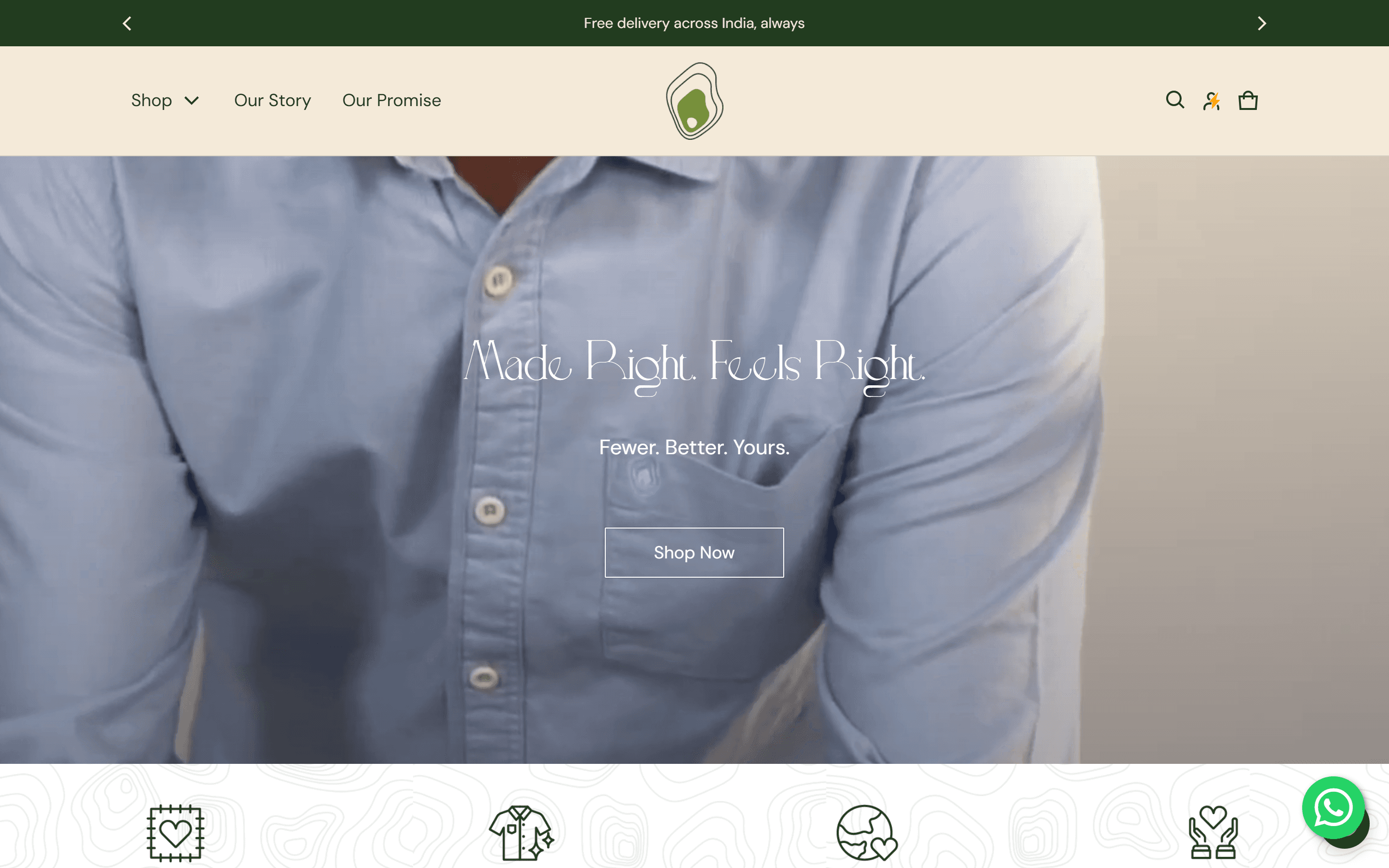
The homepage had no brand voice. The redesign gave it one.
The original homepage used a default Shopify Dawn theme layout with no visual identity specific to Islands of Loom. Hero copy was generic, the "Shop Now" button was undersized, and the announcement bar had no hyperlink on the 10% first-order offer. The redesign opened with a full-bleed video hero, a dark forest green announcement bar rotating four trust signals: free delivery across India, 30-day returns, COD availability, and a linked first-order discount. "Made Right. Feels Right." is now the first thing a visitor reads. The store opens with a statement.
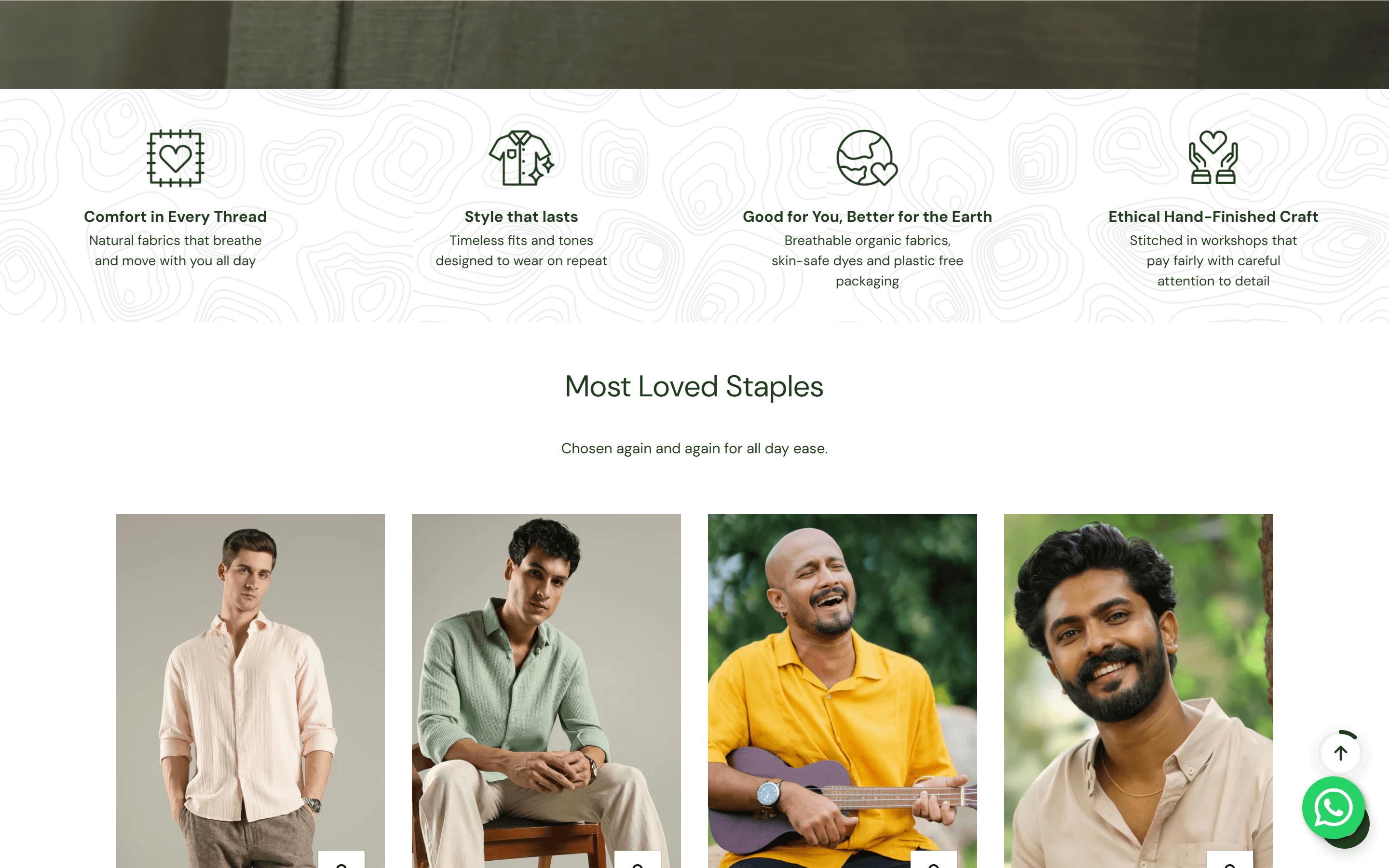
Outline icons that went unread. Four brand pillars that now earn their placement.
The original USP section used outline-only icons at a size too small to parse on desktop. The four pillars — Comfort in Every Thread, Style that Lasts, Good for You Better for the Earth, Ethical Hand-Finished Craft — were present but invisible. Icons were replaced with filled versions, type was scaled up for legibility, and the background was given a subtle topographic texture that runs through the brand's visual language. Below it, the Most Loved Staples shelf shows the range: Dawn Gauze at ₹2,999, Meadow Waffle at ₹3,799, Sunshine Linen at ₹3,499. The section reads as designed, not inherited.
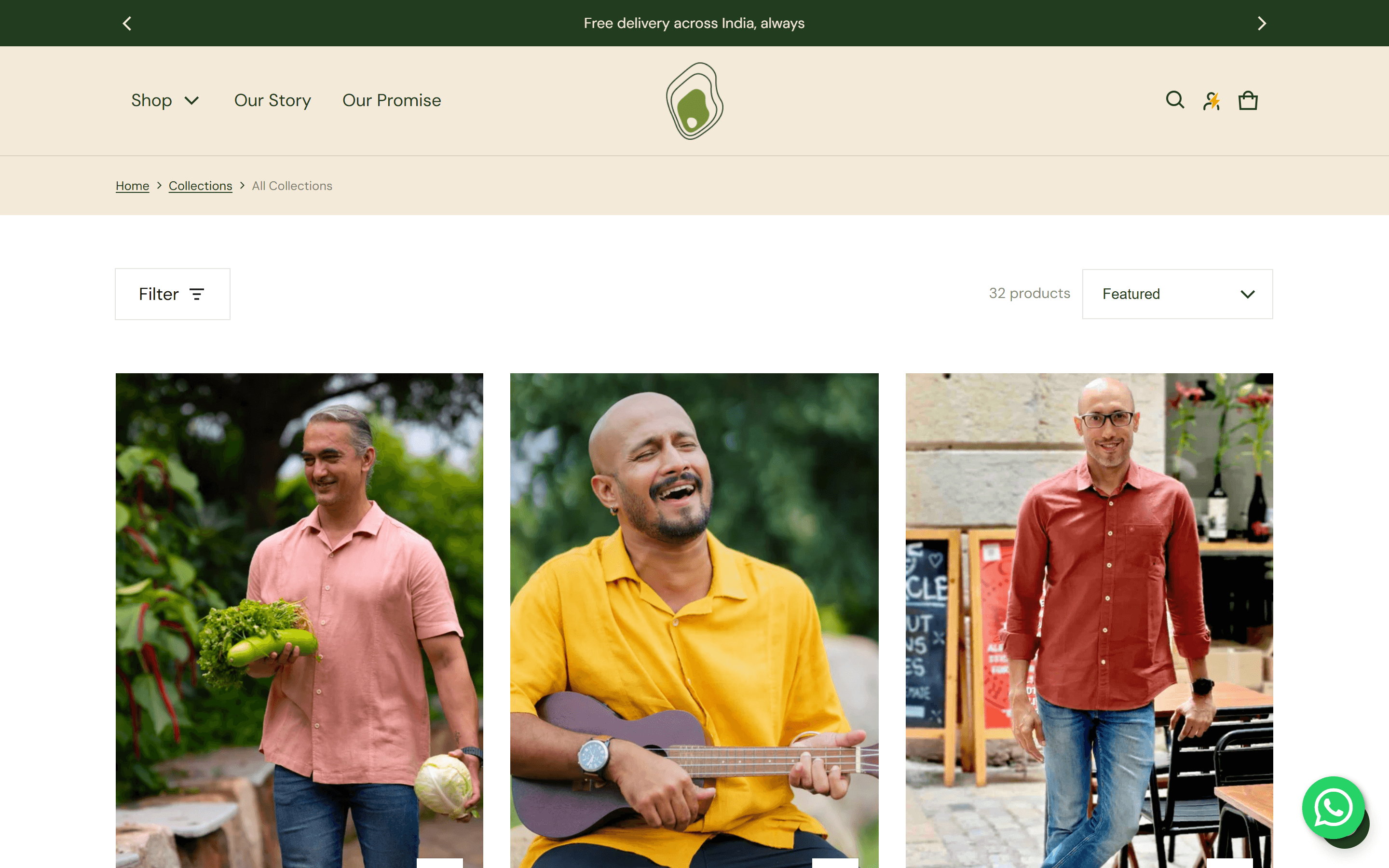
32 shirts. Sold-out states that were invisible. Now they aren't.
The shop grid had sold-out products displaying with the same weight as available ones — no visual differentiation, no end-of-grid placement. A customer browsing had no signal to skip unavailable options without clicking into each card. Sold-out products were moved to the end of the sorted list and given a distinct visual treatment. Filters were also tightened: the filter panel was cleaned to reflect the six fabric families rather than returning duplicate and miscategorised entries. The grid shows 32 products across Breezy Cottons, Everyday Cottons, Linen Edit, Waffle Cottons, Hemp Series, and Most Loved. No dead ends.
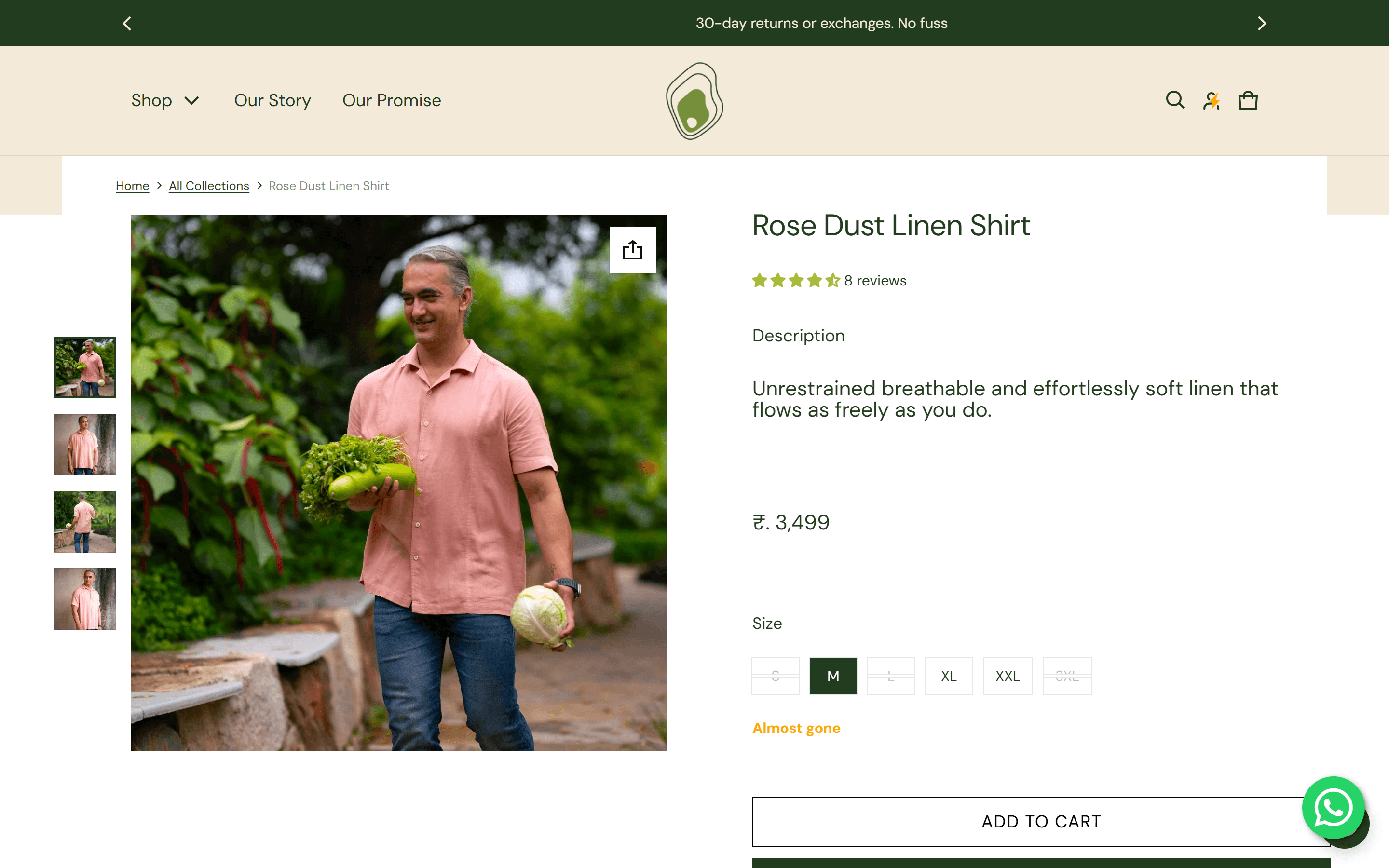
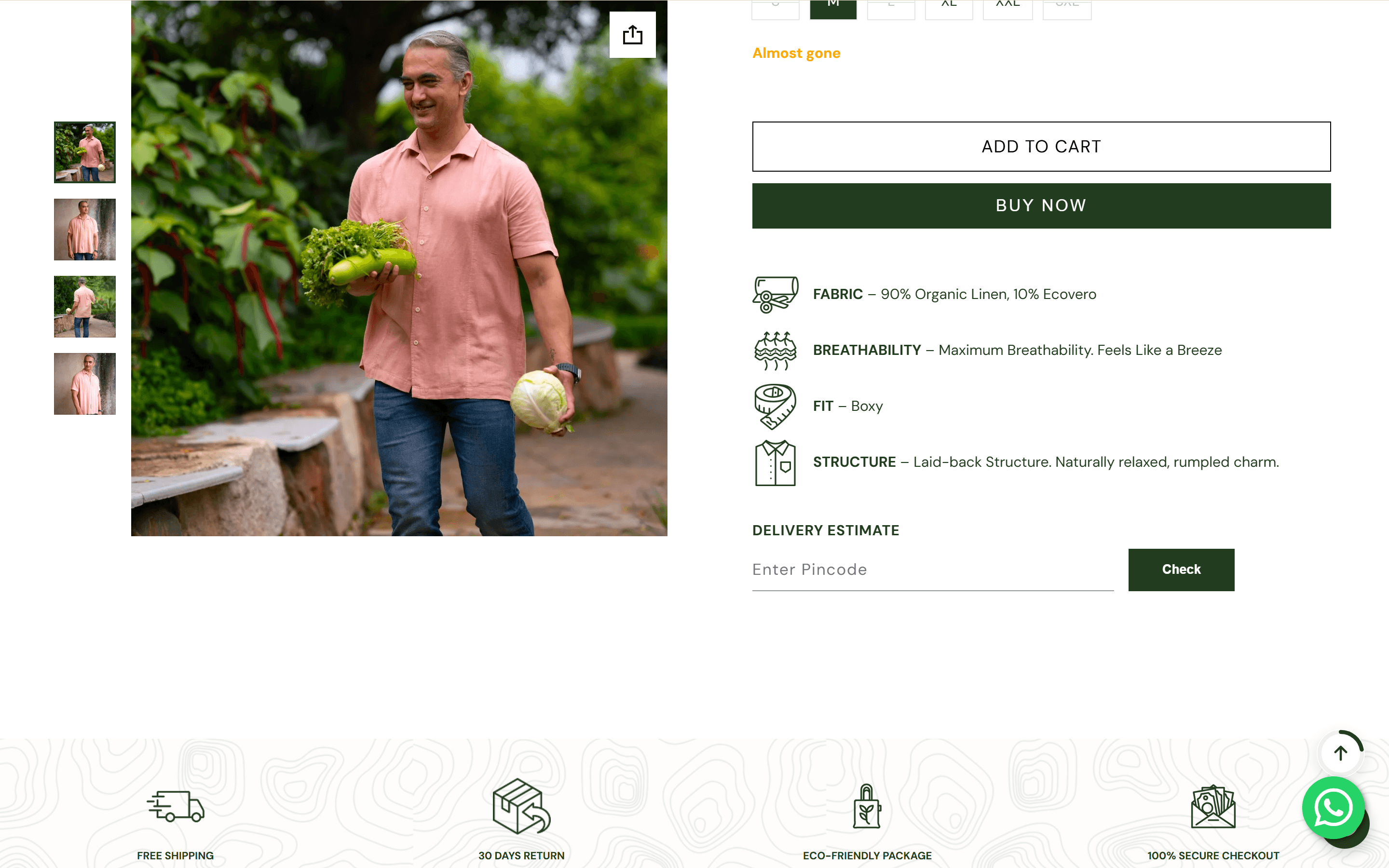
A product page that showed a photo and a price. This one justifies both.
The default PDP gave a customer a product image, a size selector, and an add-to-cart button. Nothing explained what made a ₹3,499 linen shirt worth buying, or whether the standard size would fit this cut. Three additions changed it: a custom size chart mapped to each fit type — Boxy, Relaxed, Slim — rather than a generic guide; a Delivery Estimate field using Shopify's pincode API so the buyer sees arrival date before committing; and four product feature icons placed directly below the buy buttons, each with a one-line spec: Fabric composition, Breathability level, Fit name, Structure. The wishlist icon was moved next to the product title. Every question a considered buyer has is answered on the page.
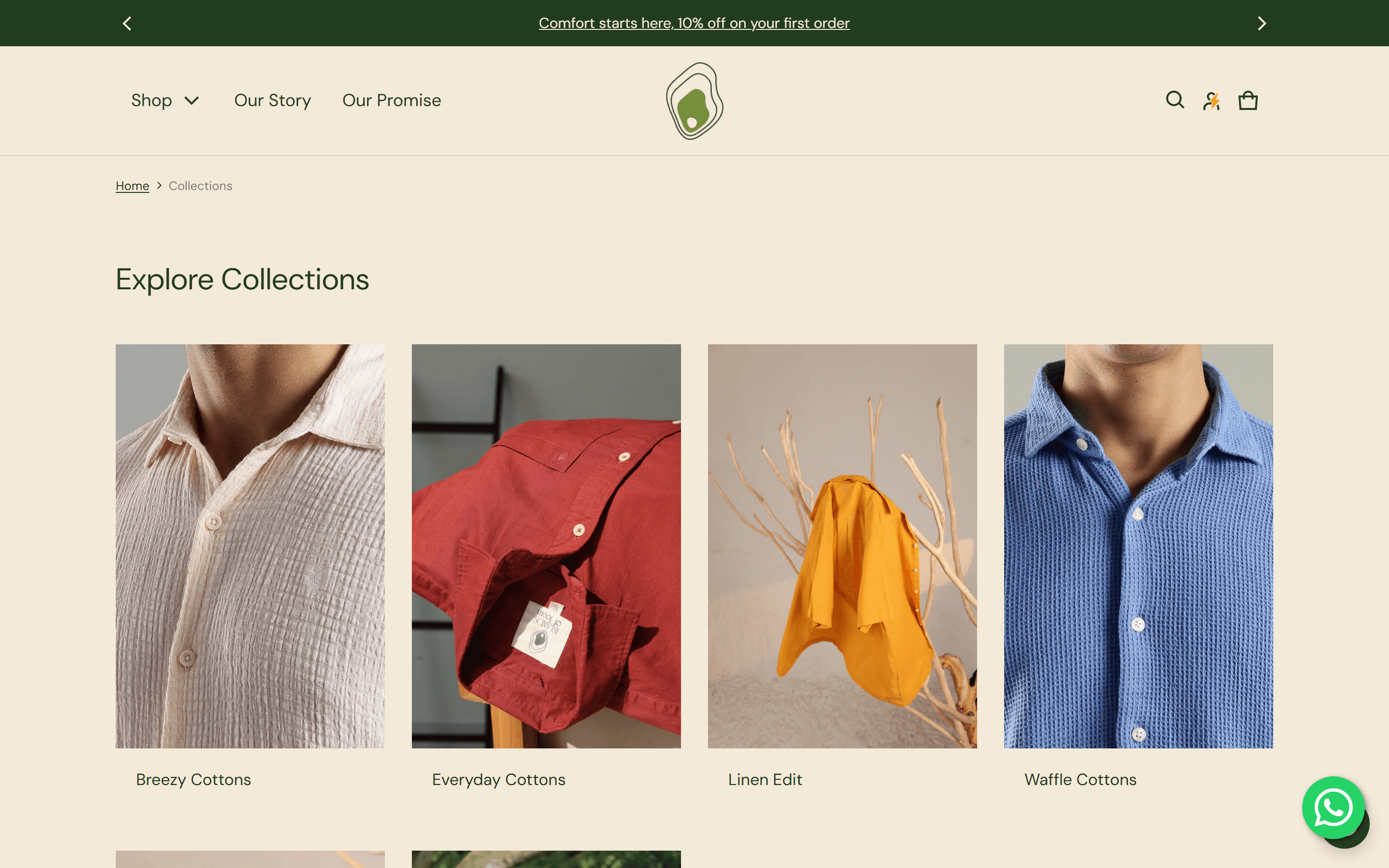
Six fabric families. One page to understand the full range.
Islands of Loom organises its shirts by material and construction, not by season or colour: Breezy Cottons, Everyday Cottons, Linen Edit, Waffle Cottons, Hemp Series, and Most Loved. The collections page was structured to make this fabric-first logic legible. Each card uses an editorial close-up of the material — Breezy Cottons shows gauze weave texture, Linen Edit shows drape, Waffle Cottons shows the grid structure. The page becomes a material guide before it becomes a product browse. A customer who knows they want linen lands in the right place without scrolling through 32 products.
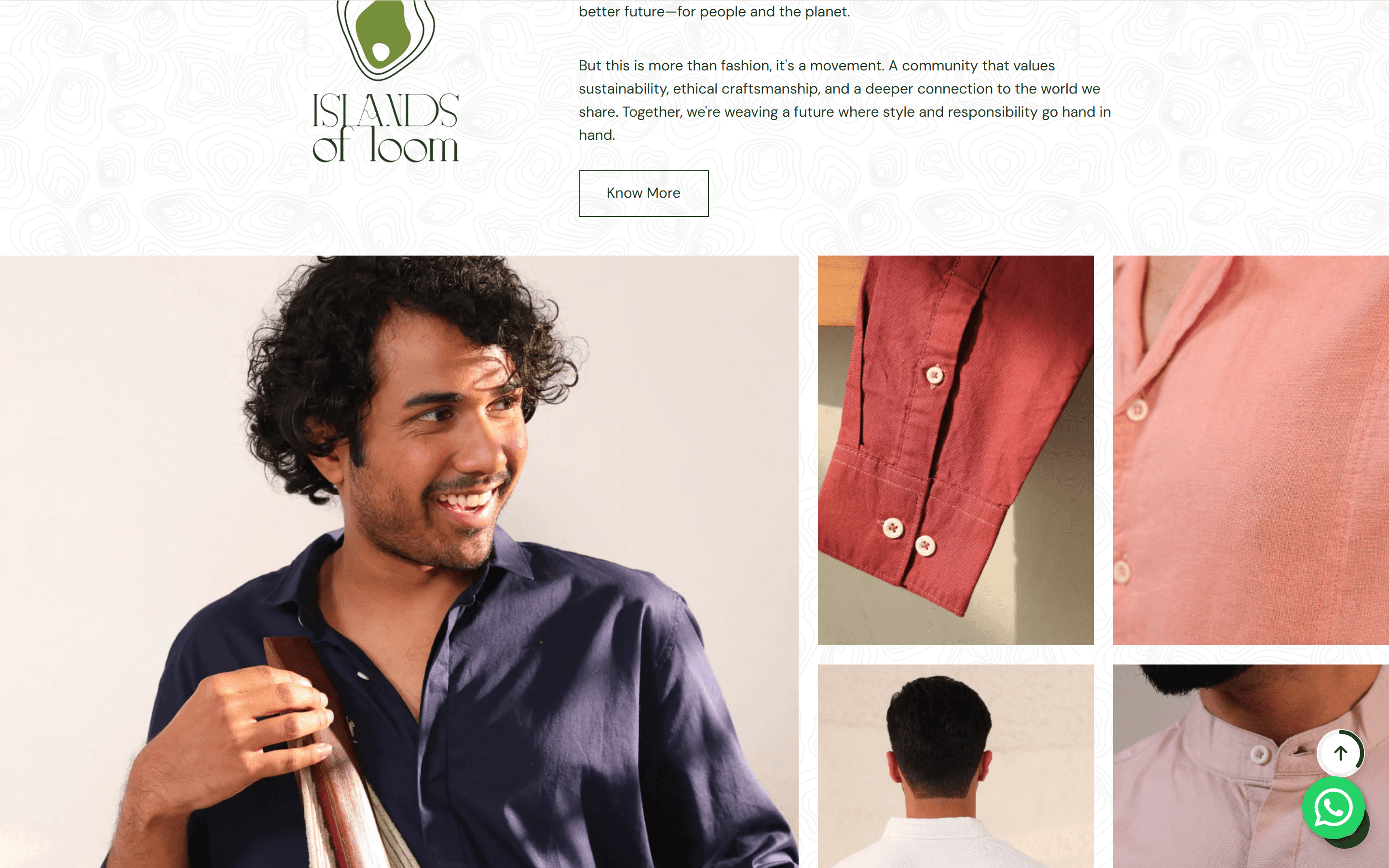
The brand story was buried. It now holds the centre of the homepage.
Islands of Loom's founding thesis — sustainable menswear from India's natural fibres — was not visible in the primary shopping experience. The Woven with Purpose section was built into the homepage as an editorial block: one full-height lifestyle image on the left, four detail shots arranged on the right, and brand copy positioned beside the logo. "Islands of Loom was born from a passion for mindful living, creating sustainable clothing that inspires conscious choices." The customer browsing the product shelf above sees it. The one reading more carefully stops here. The section functions as a mission statement, not a filler block.
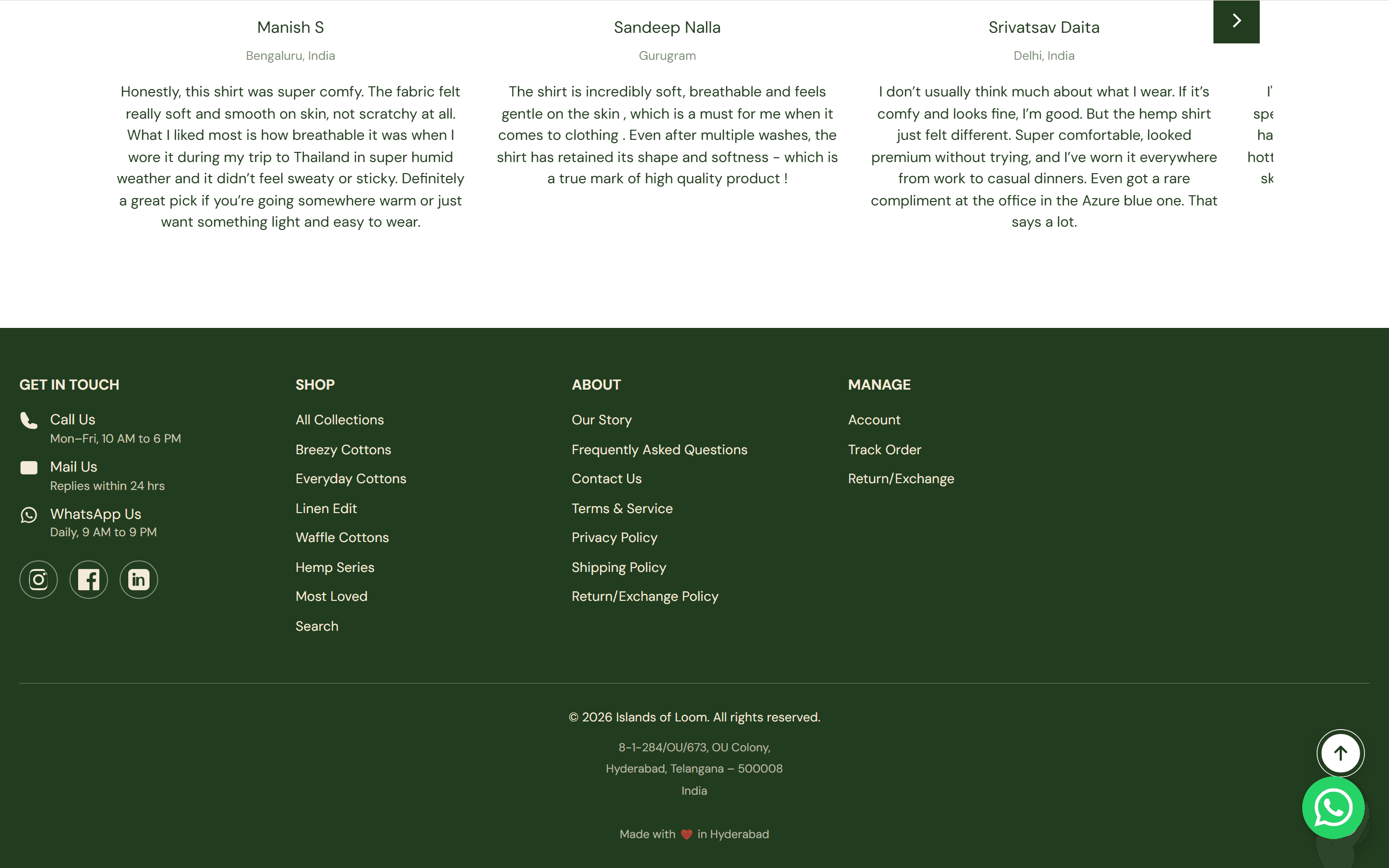
A footer with placeholder columns. Four working sections and a live WhatsApp line.
The previous footer had a handful of links and no contact infrastructure. The rebuilt footer runs four columns: GET IN TOUCH with call (Mon-Fri, 10 AM to 6 PM), email (24-hour reply), and WhatsApp (daily, 9 AM to 9 PM), all functional with hours visible; SHOP linking to all six collections; ABOUT with policies, FAQ, and brand pages; and MANAGE with Account, Track Order, and Return/Exchange. WhatsApp was integrated via a third-party app — the green button is live site-wide and routes to the brand's verified number. Social icons were updated and made clickable. The footer closes the experience without losing the customer.
Performance.
Audited on the live Shopify store in September 2025, one month after launch. Mobile score reflects the video hero load, standard for fashion brands running editorial photography at this price point. Core Web Vitals within Shopify's hosted infrastructure limits.