Desi Art Mag. 2 issues a year. 17 countries. Subscription commerce for a print magazine built on Shopify.
Client
Desi Art Mag
Year
2024
Scope of Work
Desi Art Mag is a print magazine dedicated to South Asian contemporary art. Published twice a year, each issue profiles artists, collectors, and cultural figures shaping the scene. No jargon. No gatekeeping. Issue #2, 'Gatekeepers and Open Doors,' ships to readers across 17 countries.
The brief
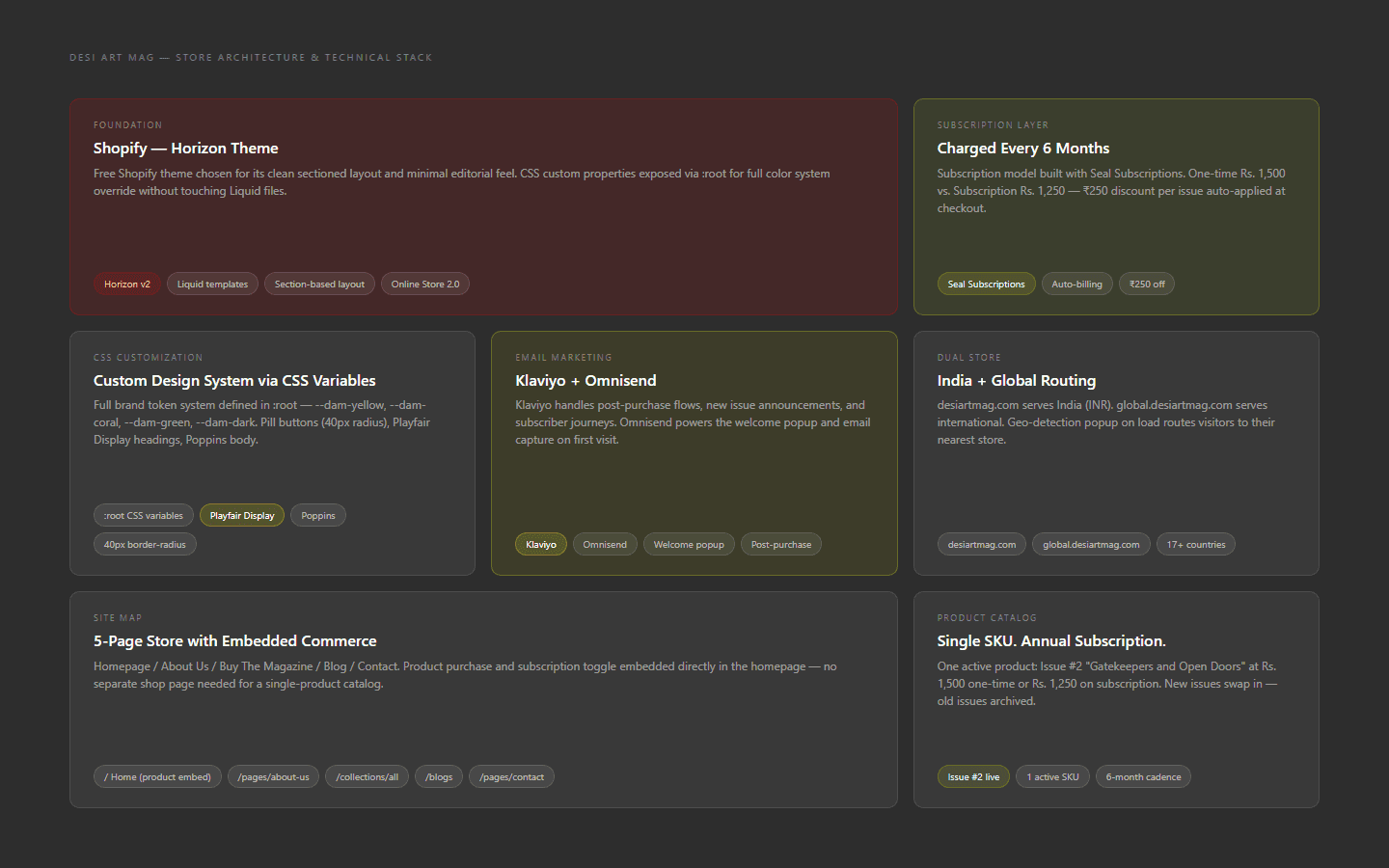
Shivansh Wadhwa needed a store that could sell the magazine as both a one-time purchase and a recurring subscription. Shopify's native checkout handles one-time orders only, so a subscription app was integrated to auto-charge every 6 months at Rs. 250 less than the single-issue price. The store runs on Shopify's Horizon theme, with all brand colors and typography applied through :root CSS variables without touching any Liquid files. Two separate storefronts handle the global split: desiartmag.com for India (INR) and global.desiartmag.com for international readers.
The store launched in December 2024 with one active SKU and a subscription model that charges and ships automatically with each new issue. One thing I'd do differently: build both storefronts as a single international store using Shopify Markets. A shared catalog and email list would have simplified post-purchase flows considerably.
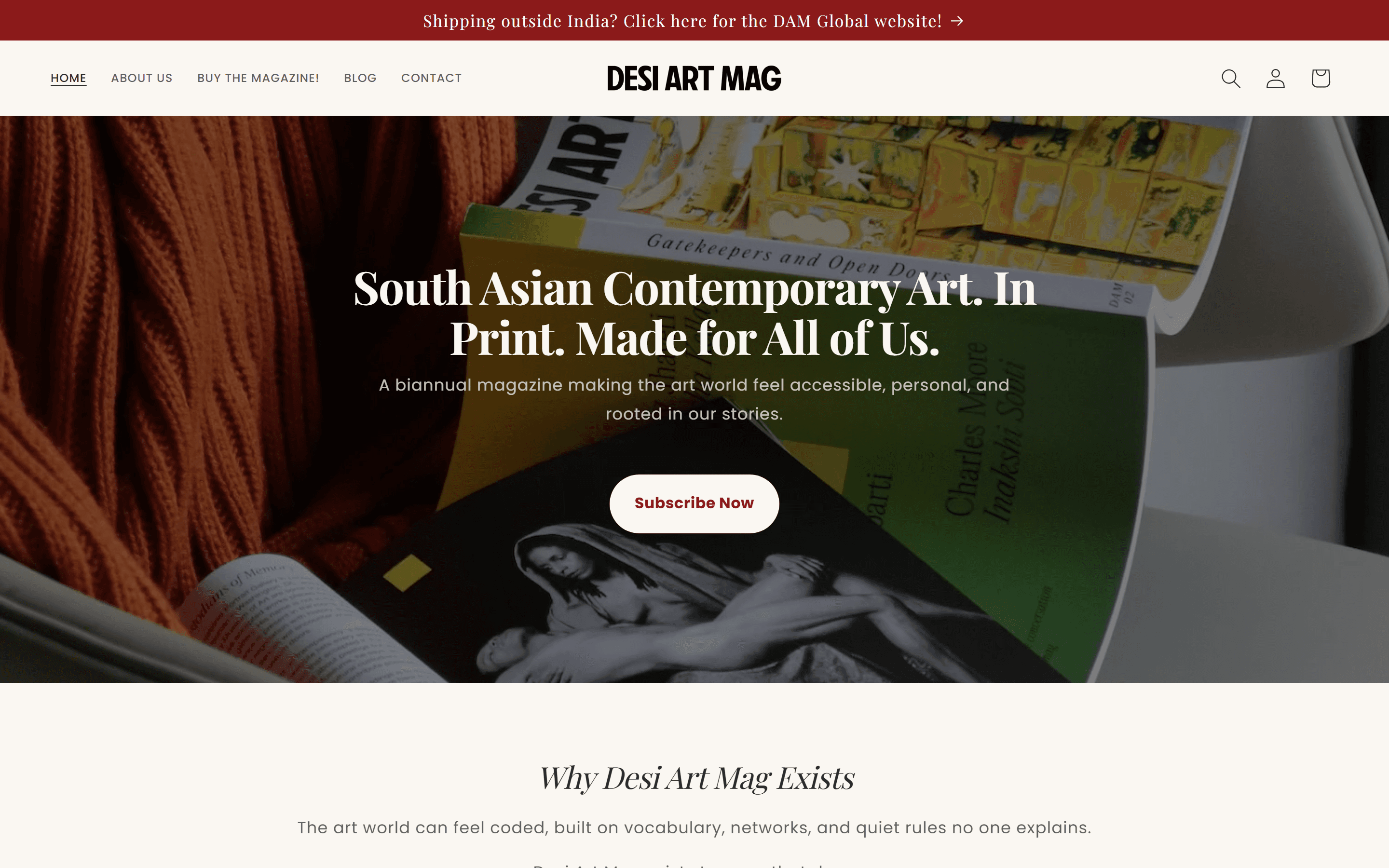
Horizon defaults to a product catalogue. This one opens on a magazine.
The Horizon theme assumes multiple products and collection grids. Desi Art Mag has one. The hero was stripped to its editorial core: full-bleed cover photography, a headline built around the mission, and a single pill-shaped CTA. The announcement bar at the top runs in DAM Burgundy (#8B1A1A), the store's first color signal, visible before the hero image loads.
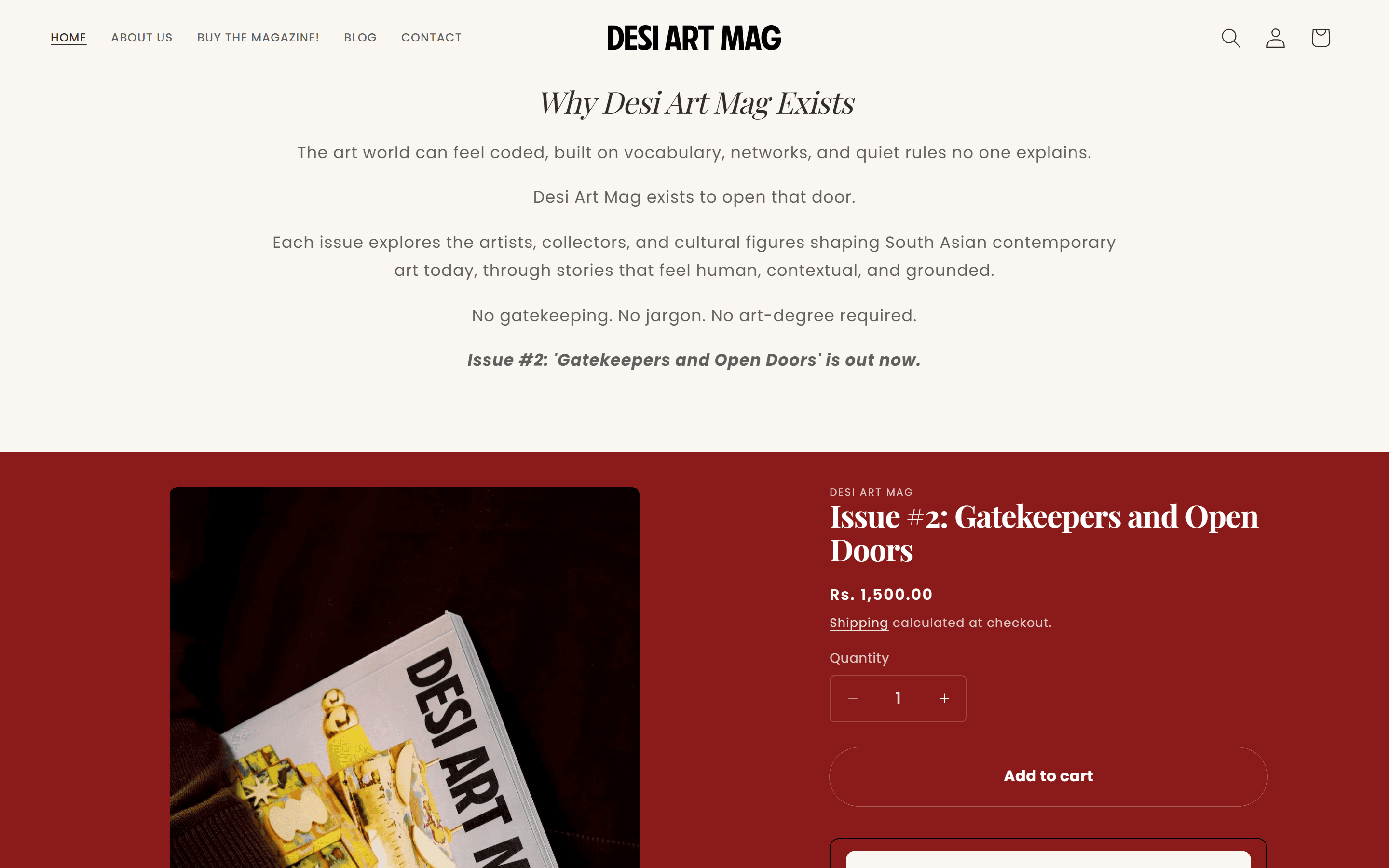
The store explained itself before asking for a purchase.
Shopify's Horizon sections are designed to push product. The first scroll below the hero is editorial instead: 'Why Desi Art Mag Exists' in Playfair Display italic, followed by three lines of mission copy. The product embed follows directly below, same page, different intent. Most single-product stores send visitors straight to Add to Cart. This one earns the click first. The purchase decision becomes a choice, not a prompt.
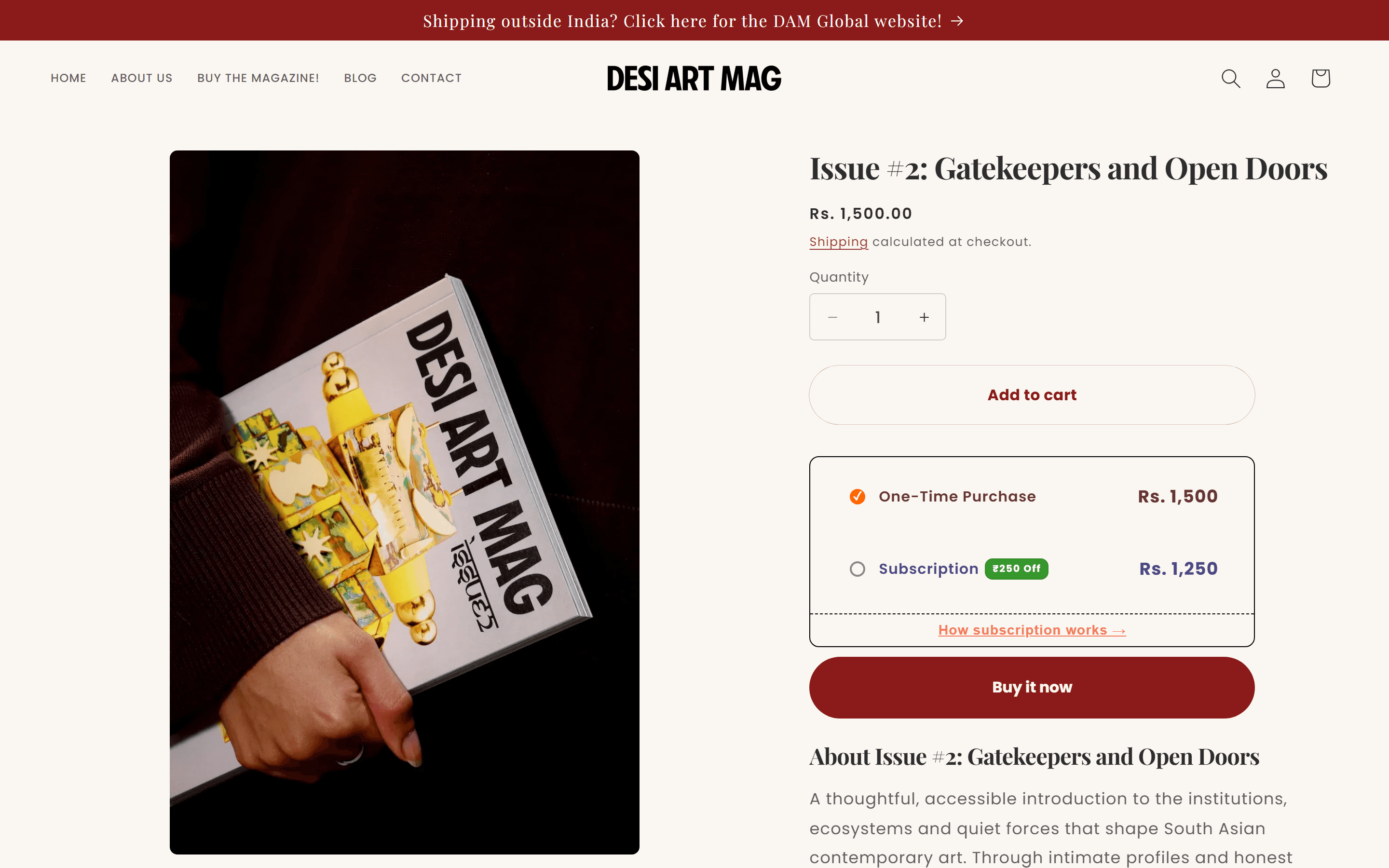
1 product. The page built around subscription, not just Add to Cart.
Issue #2: 'Gatekeepers and Open Doors' at Rs. 1,500. The Horizon product page defaults to a standard gallery layout with breadcrumbs and tab navigation. Here, the cover photograph anchors the left half, with both issues visible in the gallery. On the right: price, Add to Cart, and the subscription widget directly below. No upsells. No cross-sells. No distraction. The 'About Issue #2' description begins immediately under the buy button. A reader lands here with no friction between the cover and checkout.
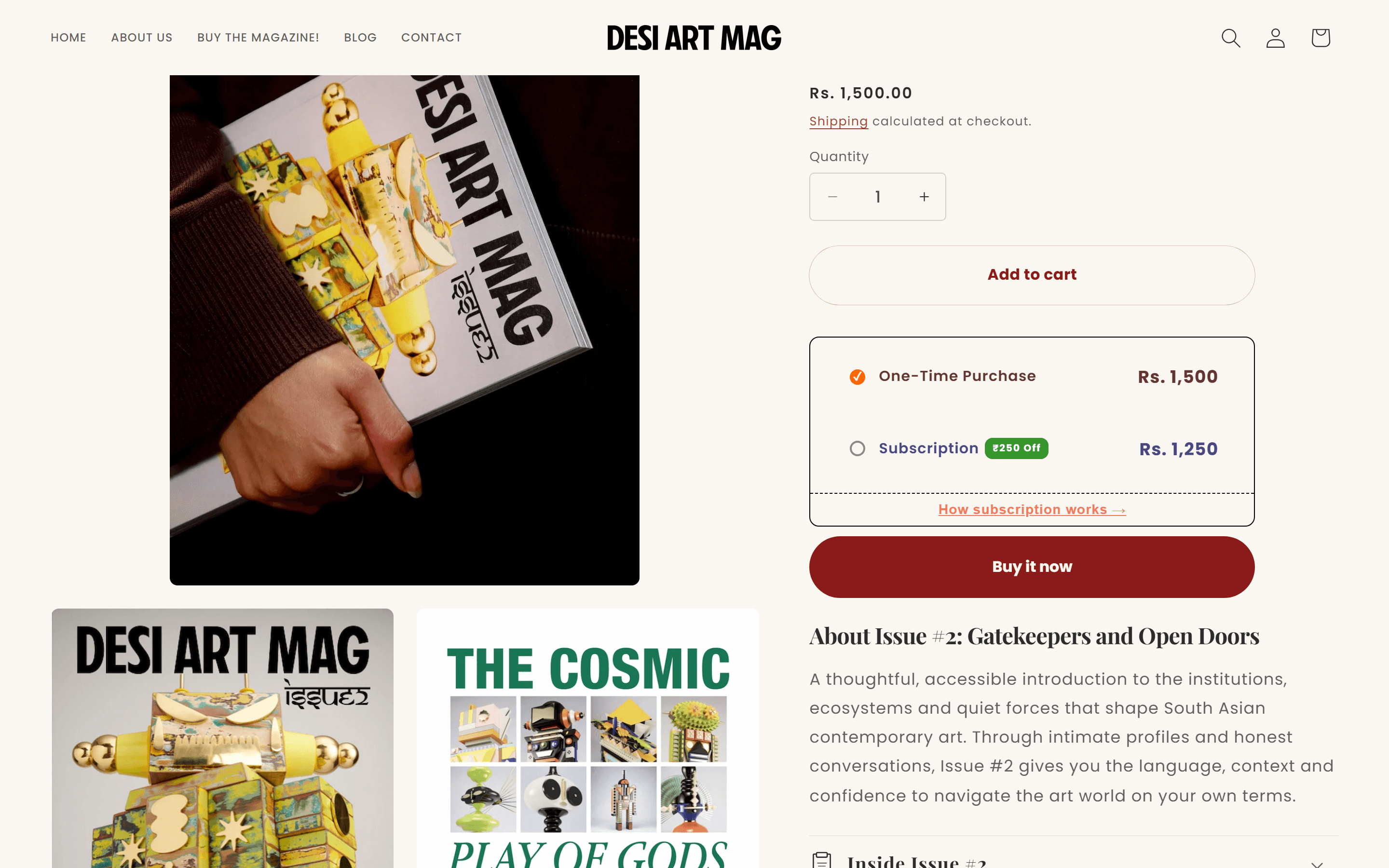
Shopify doesn't do recurring billing. A subscription app changed that.
Shopify's native checkout handles one-time purchases only. A subscription app was integrated to inject a purchase-type widget directly into the product form. Readers see two options in one vertical stack:
One-Time Purchase: Rs. 1,500
Subscription: Rs. 1,250 (Rs. 250 off, auto-charged every 6 months)
Subscribers receive each new issue automatically. No re-order needed. The product URL captures the mechanic exactly: /products/annual-subscription-charged-once-every-6-months.
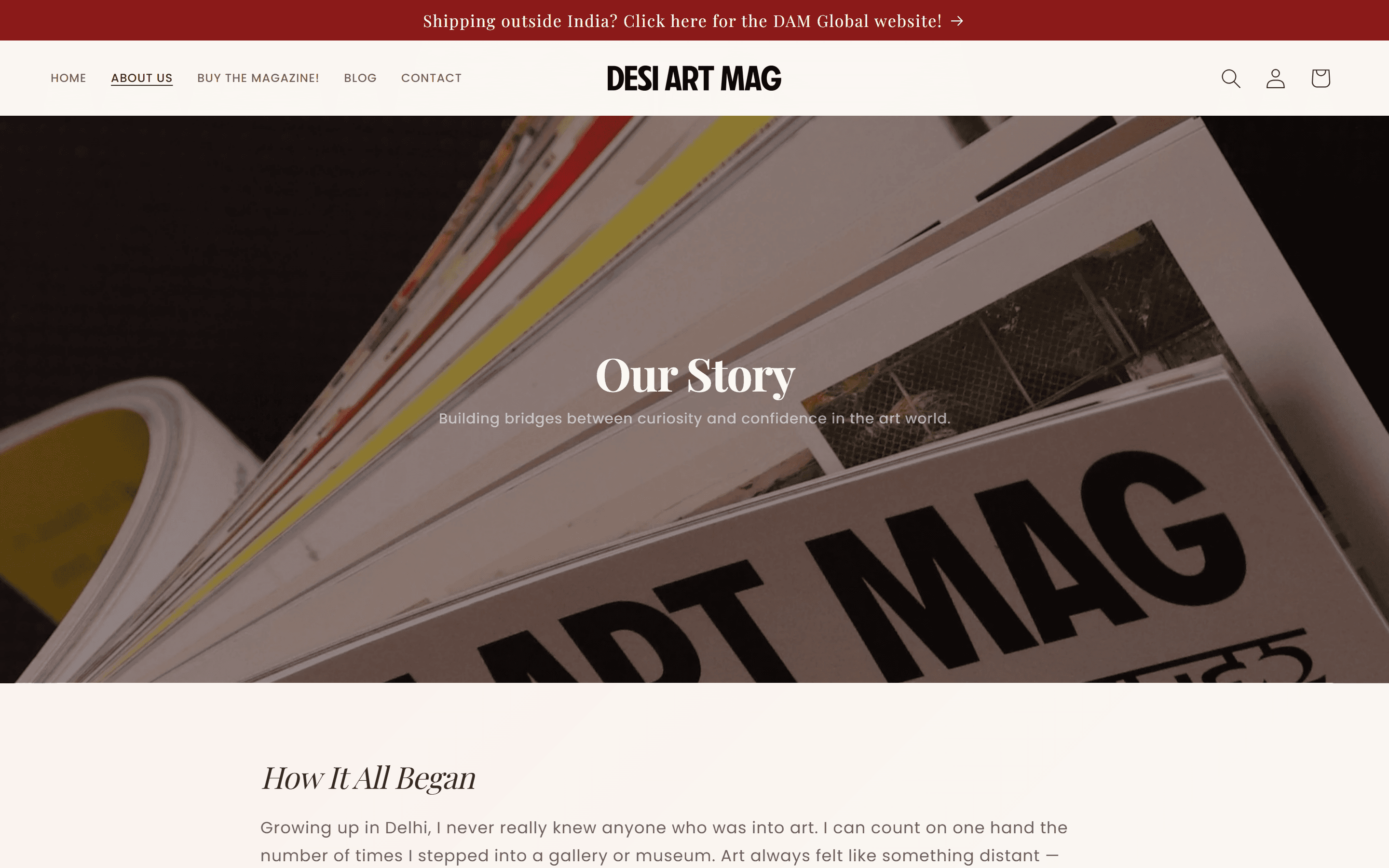
The About page as a full-bleed editorial spread, not a founder bio.
Horizon's default About page is a plain text section on a white background. The Shopify section editor was used to replace it with a full-width image block: a close-up of the magazine mid-opening, spine visible, pages spread. 'Our Story' in Playfair Display italic sits centered over the photograph. The subheading 'Building bridges between curiosity and confidence in the art world' runs below it in Poppins body. The founder's story follows beneath the fold. The layout mirrors the magazine's editorial voice: image-first, context second.
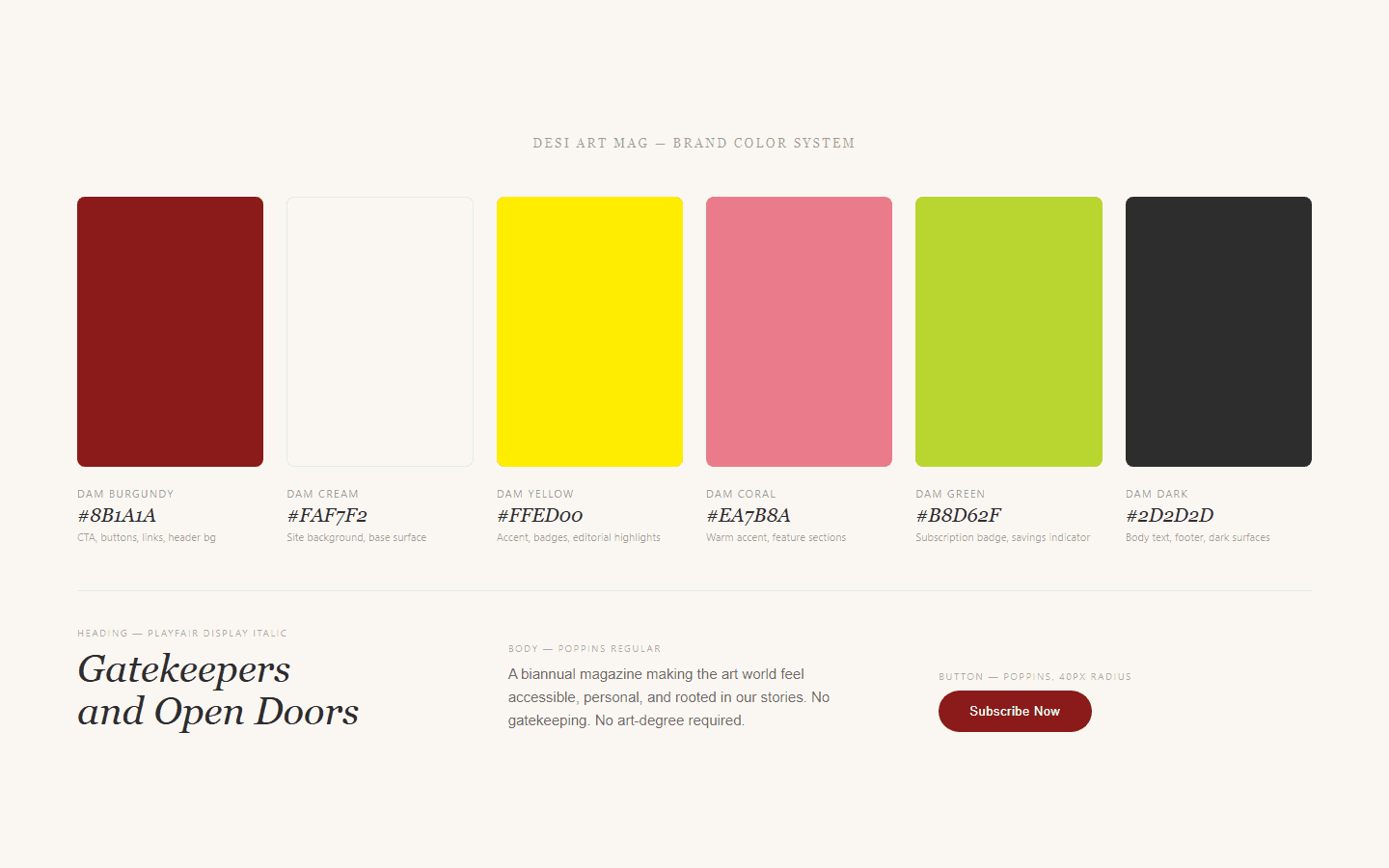
A color system defined in :root. Not a single Liquid file opened.
Horizon exposes its design tokens as CSS custom properties. All overrides were applied through a single :root block, without touching any Liquid template file.
--dam-yellow: #FFED00 (accent badges, editorial highlights)
--dam-coral: #EA7B8A (warm feature sections)
--dam-green: #B8D62F (subscription savings badge)
--dam-dark: #2D2D2D (body text, footer)
--color-button: #8B1A1A (every CTA button in the store)
Typography: Playfair Display Italic for headings, Poppins for body copy. All buttons at 40px border-radius.
Two storefronts. One brand. Geo-routing from the first visit.
The brief required global shipping from launch. Two separate Shopify stores run in parallel to handle the split:
desiartmag.com: India, INR pricing, domestic fulfillment
global.desiartmag.com: international readers, 17+ countries
A geo-detection popup routes visitors on first load. The announcement bar reinforces this for anyone who lands directly. Klaviyo handles email marketing across both stores. Site structure: Home, About Us, Buy The Magazine, Blog, Contact. The subscription widget is embedded in the homepage so readers can subscribe without navigating away.
Performance.
Horizon is one of Shopify's better-performing free themes. Third-party scripts from Klaviyo add page weight on first visit. Core Web Vitals measured post-launch in January 2025.